The Original Dry Bag Steak | Make Artisan Dry Age Steak at Home › Forums › Search › Search Results for 'brown meat after aging'
-
AuthorSearch Results
-
March 4, 2013 at 6:54 am #6781
In reply to: WetAge-DryAge
Ray
MemberJust going by experimentation and studys by people more advanced than myself. I think the key word is ageing.
executive SummAry
Prepared for the National Cattlemen’s Beef Association’s Center for Research & Knowledge ManagementJeff W. Savell, Ph.D.
Regents Professor and
E.M. “Manny” Rosenthal Chairholder, Texas A&M Universityexcerp:
PALATABILITy ATTrIBUTeS
flAvoR
The greatest reason for dry aging beef is to further enhance its flavor and to impart the flavor notes that are generally associated with this product. Flavor is a difficult attribute to study because it requires very specifically trained panelists to evaluate the complexity of the positive and negative notes that may occur in meat in general and dry- aged beef in particular.
Campbell et al. (2001) conducted one of the most extensive studies to date on the effect of dry aging on beef flavor. They evaluated Certified Angus Beef® brand striploins and shortloins that were first vacuum packaged to simulate initial packaging and shipping conditions (7 or 14 days), followed by various times of dry aging (0, 7, 14 or 21 days) before vacuum packaging, storage (0, 2, 9 or 16 days) and steak cutting. A number of sensory traits were evaluated including two very specific
flavor intensities important to the dry aging consumer:
overall aged-beef flavor intensity – defined
as a full, blended and sustained, cooked beef flavor that has few dominating individual flavor notes and creates a smooth, balanced impression
brown/roasted flavor intensity – defined as a round, full, dark, caramelized aromatic generally associated with beef that has been cooked with dry heat.
The authors found that with at least 14 days of dry aging, aged flavor and brown- roasted flavor increased significantly compared to those cuts dry aged for fewer days or that were not dry aged at all. They also found that aged flavor peaked at 9 days of vacuum storage after the dry aging period and actually declined when stored at 16 days, indicating that some benefits of dry aging were reversed slightly with this additional vacuum storage period.February 28, 2013 at 12:29 am #6745In reply to: What to do after aging
Ron Pratt
MemberUnless it’s a Mom and Pop butcher shop they sell most of what they cut the same day. I’ve seen my shop open and go thru 3 rib eye subprimals just while I’m standing in line! Once meat is cut and placed even in a controlled environment display case the meat will bloom (turn red) and then start to darken. Most consumers are put off by the browning meat, so a smaller shop won’t cut until you order. Ron
January 9, 2013 at 7:20 pm #6534In reply to: Brown meat after aging?
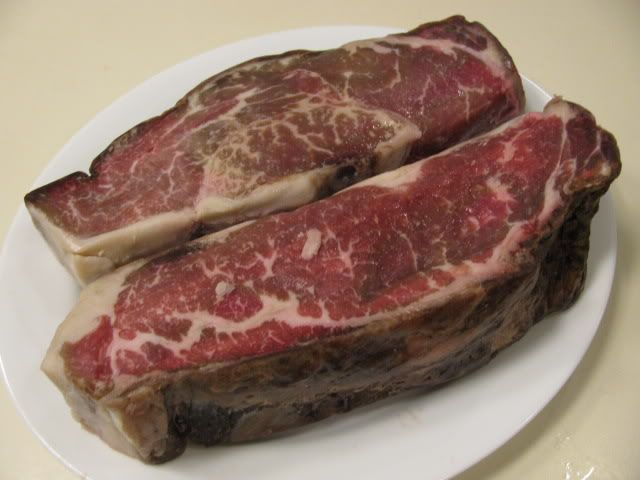
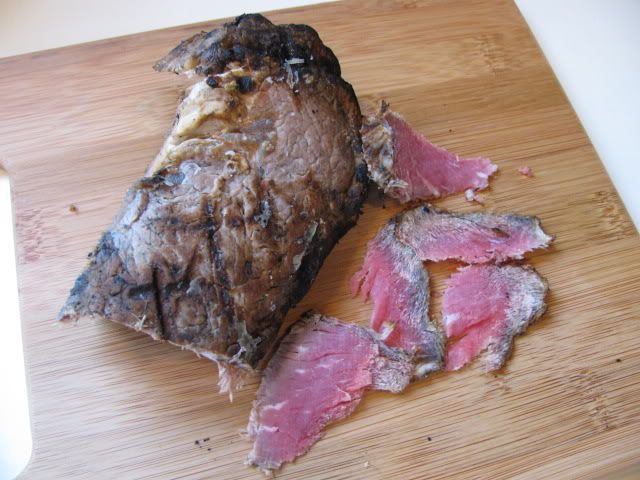
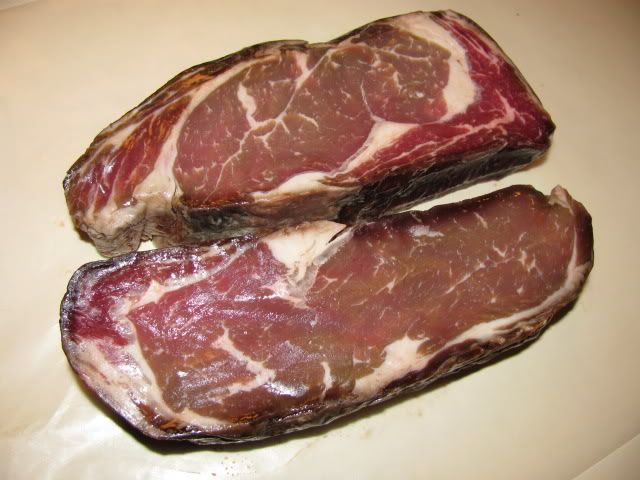
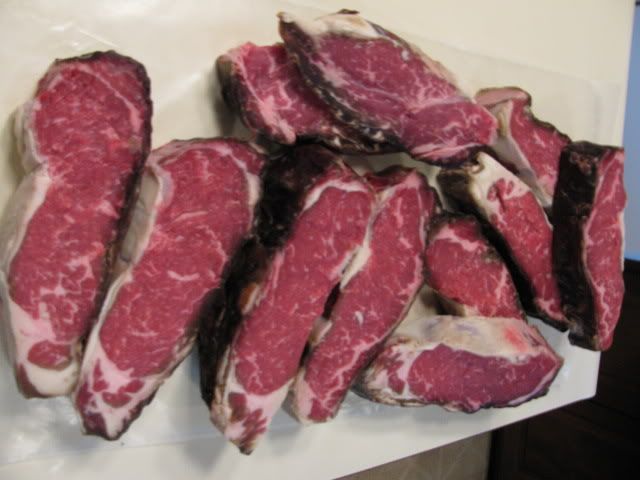
MemberWelcome aboard, Curt! What you have described is nothing more than the inner layer of the dried meat surface from aging. The degree of trimming is a personal choice, but that layer was safe to eat. I have long been an advocate of not trimming back to “grocery store red”! You go to all the effort of aging and then trim away any signs of it. Perhaps enjoying that brown layer is an acquired taste, but I like it myself, though my wife does not. Once my steak has been grilled I find that layer to be very tasty, though somewhat chewy. As for pictures I have often posted my trimmed steaks, which you’ll see include that layer you described. Here’s some shots of my results over the last couple years.
Ron
 January 9, 2013 at 10:21 am #1519
Topic: Brown meat after aging?
in forum Dry Aging Steak with UMAi Dry®Curt
MemberJust under the hardened/jerky like crust there was a thin(1/4″-3/8″) layer of brown meat.. Below that there was nice red meat. Has anyone experienced that? I just trimmed it which of course resulted in more losses, but was wondering if it would’ve been safe to leave on and also what was the possible causes. I had a data logger recording temperature the whole time which was checked with several other thermometers to be accurate. Temperature was maintained 33-37 the whole time save for a couple short dips to 32 and for the times I opened the door of the fridge in which case the temperature went above 40f temporarily. I did adust the thermostat to maintain temperature a little higher after seeing 32 a couple times. The fridge is a spare in the garage which was only opened to look at the meat every few days other than that it was not disturbed. The meat was fantastic but never did I see brown meat in anyone elses results. No pictures or posts in blogs, forums or reviews had any mention of it. It concerned me.
Any help is greatly appreciated.March 27, 2011 at 2:10 am #4681In reply to: Curing aged brisket?
Frank
MemberActually Ron here is the real recipe if you want it.
1 Tbsp Morton Tender Quick (or Basic Dry Cure) per pound
1/2 Tbsp dark brown sugar, packed per pound
1/2 Tbsp freshly ground black pepper per pound
1 tsp granulated garlic powder per pound
1 tsp ground coriander per poundDirections:
Trim surface fat of an untrimmed brisket flat to 1/8”, this is important so that the cure fully penetrates the meat; yet it leaves enough fat to keep the meat moist. If you do a whole brisket or thicker cut of meat, you will need to prepare a wet cure and inject the meat.
In a small bowl, mix Morton Tender Quick, sugar and remaining ingredients. Mix all ingredients well, making sure to break up any lumps of sugar, no matter how small. I found that the bare hands work best. Rub mixture into all sides of brisket, and work it in welIn a small bowl, mix Morton Tender Quick, sugar and remaining ingredients. Mix all ingredients well, making sure to break up any lumps of sugar, no matter how small. I foundl (do not shake off any excess that is on the meat). I prepared a 5 ½ pound half flat (point end), used about ¾ of the mix, and the meat was fully cured.
Next place brisket into a two gallon Ziploc bag; expel as much air as possible, and make sure the seal is secure. Refrigerate and allow to cure 4 days, turning the brisket over every 12 hours, or at least daily. After 4 days of curing, remove the brisket from the bag, and thoroughly rinse under cold running water. After rinsing, place the meat in a container and cover with cold water. Let the meat soak for 30 minutes, change the water, and let soak for another 30 minutes. This helps reduce the saltiness from the meat. Pat dry with paper towels and apply rub.
If your brisket weighs 7 pounds or more, or if it is under 7 pound but unusually thick; you will need to add an extra day to the curing time.Dry Rub Ingredients:
3 TBS. coriander seeds (4 TBS. if you don’t have white peppercorns).
2 TBS. black peppercorns
2 TBS. yellow mustard seeds
1 TBS. white peppercorns
2 TBS. of granulated garlic
Makes enough cure for one brisket flat.Directions:
Combine the first four ingredients, and coarsely grind in a spice grinder or coffee grinder. Pour ground mixture into a bowl, add the granulated garlic and remix. Apply the dry rub to the brisket generously, working the rub into the meat by pressing it in with the palms of your hands. Air dry in the refrigerator for 4 to 8 hours before before placing it in the smoker.
Remove brisket from the refrigerator and place it on a tray, fat side down, and place in a pre-heated Bradley Smoker, at 220 degrees F. Apply 3 hours of smoke. I used 2 hours of pecan, and finished with 1 hour of apple. Cook until the internal temperature reaches 160 – 165 degrees F. You can also use a smoking temperature of 250 degrees F.
When the brisket reaches an internal temperature of 160 – 165 degrees F, take it out of the smoker. Wrap the brisket in one layer of heavy-duty aluminum foil. Wrap it in a towel, and place it fat-side up in a cooler or microwave oven for two hours (if just going into the microwave you don’t need the towel). Remove brisket from the cooler (or microwave) and remove the foil and save. Wrap brisket in plastic wrap, and then wrap it in the foil you just saved. Place in the refrigerator for at least 1 day, two is better. When ready to eat thin slice the pastrami across the grain for a tenderer slice. You can either eat it cold or warm it up.What i gave you earlier was the basic cure recipe (substitue for morton quick)
I’M a Bradley Smoker addict. I’m thinking of 11 days of dry aging prior making the recipe. Hope it will turn out good. At least good enough to rentabilise my drybag purchase.
Frank
October 22, 2010 at 9:51 pm #4108In reply to: Aging several at once.
MemberAl, the outer surface is not for everyone, but what I like to do is to challenge people to at least try it rather than just trim back to red meat and throw the dark brown away! After it is seared it mellows – but I’ll tell you what even if you trim it off your cooked steak save it in the refrig for the next day. By then it’s sort of like jerky and very tasty.
August 16, 2010 at 12:43 am #3995In reply to: My first drybag-aged results – choice rib-eye
Anonymous
GuestYes, I trimmed the dried fat heavily and I trimmed the non-fat brown meat portions down to the softer red meat, but as thinly as I could. It was a little tricky to trim the rib-eye. It has rib indentations that you have to follow. I probably lost a little more than I intended on some of the raised portions between the ribs. I sharpened my knife before I started, but I think a different type of knife might help. I’m thinking about getting a Forschner Cimeter. I’ve heard they are great on large pieces of meat.
Trimming more lightly will indeed be a challenge for me RRP. The dried outer “crust” just doesn’t feel or look very appetizing to me. But I think I’m up for the challenge, so thank you for it. If for some reason I find it unappealing after trying it, I can always trim it off the remaining steaks before grilling them. So it really won’t hurt to leave it on. (You see how I’m trying to talk myself into it?)
I’ll try it on my NY Strip and the Top Sirloin when they are done aging.
-
AuthorSearch Results